Begin with the essential storage map
Before selecting accessories, count garments by hanging length, folded items, shoes and bags. Decide which categories need prime reach and how the door system exposes them. A pull-out feature can look useful but create a narrow aisle or conflict with sliding panels. If the basic plan lacks sufficient hanging or visible shelves, fix that first. Accessories take width, height and budget that could serve core capacity.
The custom closets hub explains this room-first approach. Our components guide distinguishes the basic structure from specialized inserts. A feature should be chosen because it answers an identified need, not because a rendering feels incomplete without it.
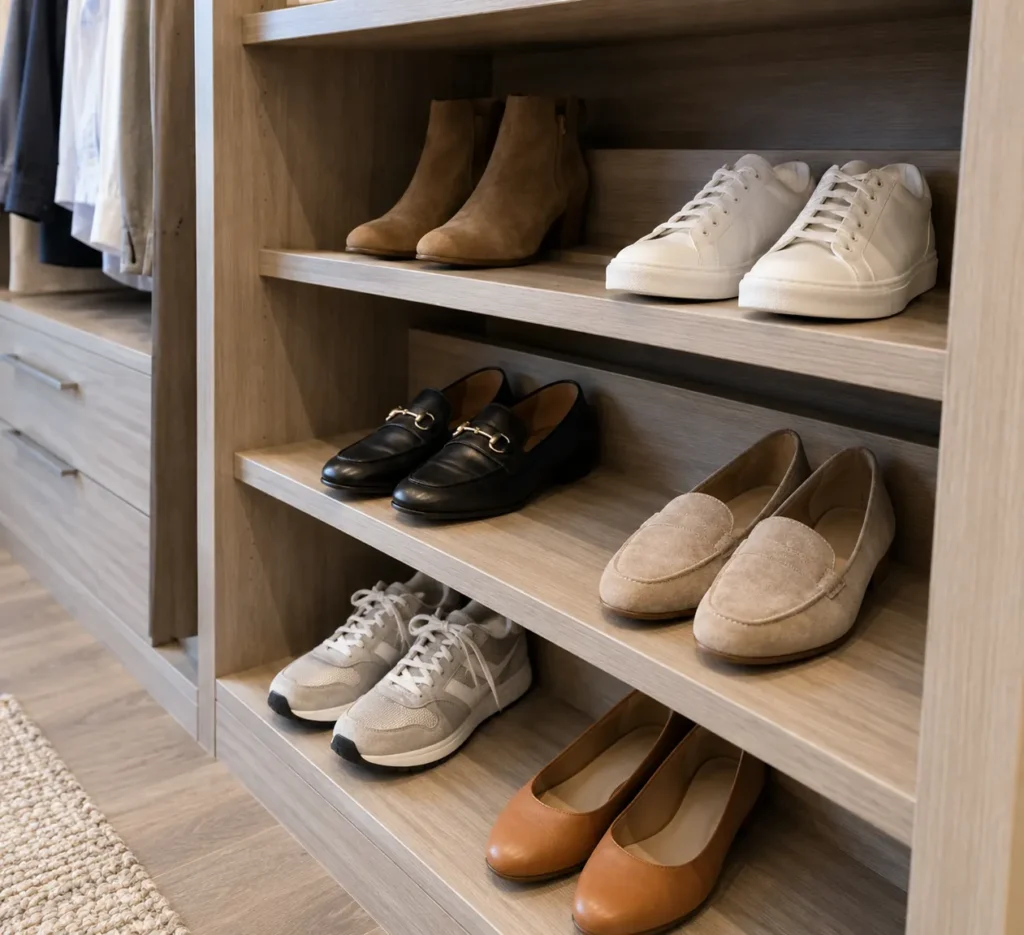
Shoe storage should follow the collection
Open shelves allow shoes to be seen and changed easily. Adjustable spacing accommodates different footwear better than a wall of identical slots. Angled display shelves can provide a particular look but may use depth differently; pull-outs may improve access in certain narrow bays while requiring hardware and extension space. Boots and bulky athletic footwear need different heights from low shoes.
Ask how many pairs are used weekly and which can be placed higher or elsewhere. A display wall may be justified in a generous dressing room but overwhelm a compact reach-in. The width spent on shoes could otherwise hold hanging or drawers, so the allocation should match the actual inventory. For winter boots arriving from outdoors, a mudroom may be a better destination than the bedroom closet.
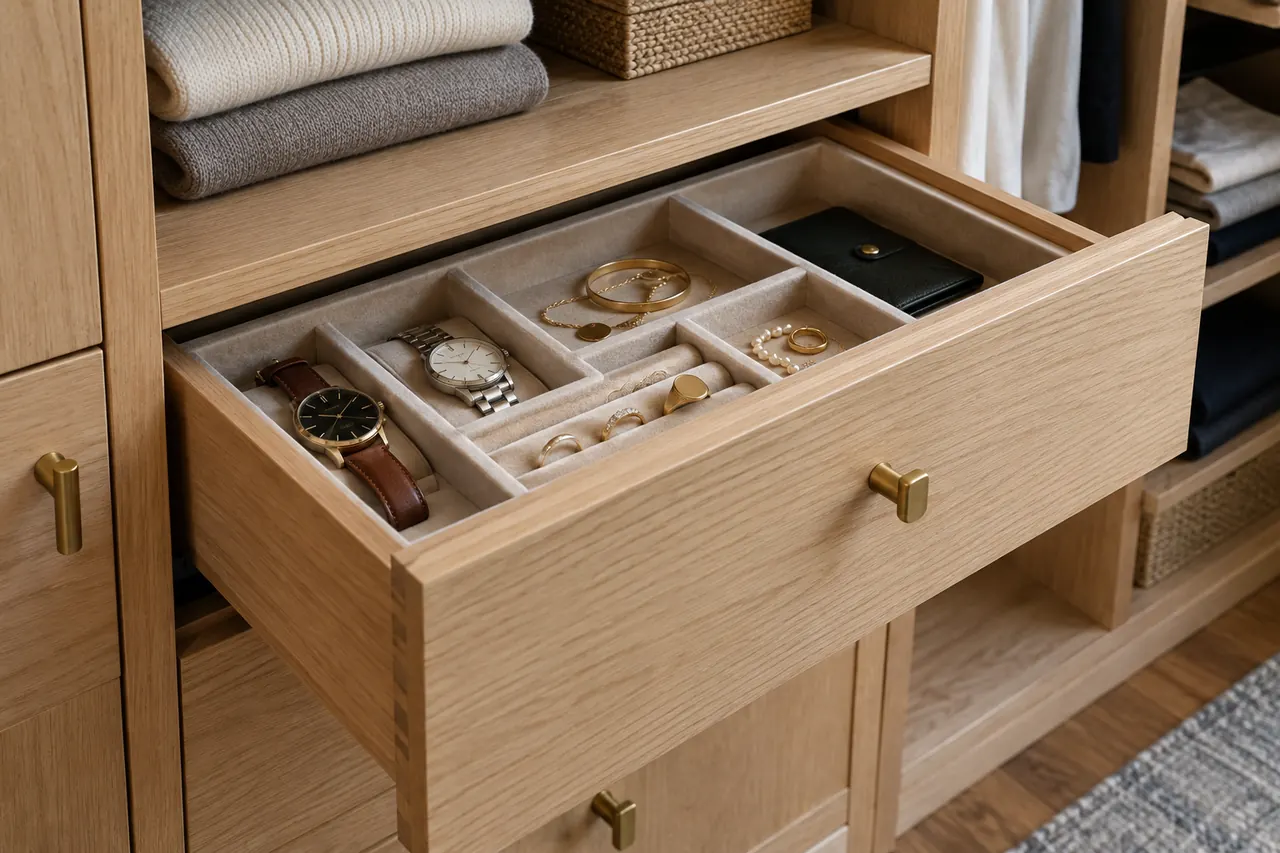
Keep small accessories contained and visible
Jewellery drawers, shallow inserts and dividers can separate small items that tangle or disappear in a deep drawer. Belt and tie storage can be simple hooks, a designated section or a pull-out depending on the number of items and frequency of use. Handbags often need enough width and height to stand without being crushed. A few well-sized shelves can be more flexible than many tiny dedicated compartments.
Inventory the collection before reserving permanent real estate. If an item is rarely worn, it may not need the most prominent location. A drawer near a mirror can make a dressing sequence convenient, but only if the drawer opens fully and the user can stand in front of it. A feature does not earn its place through appearance alone.
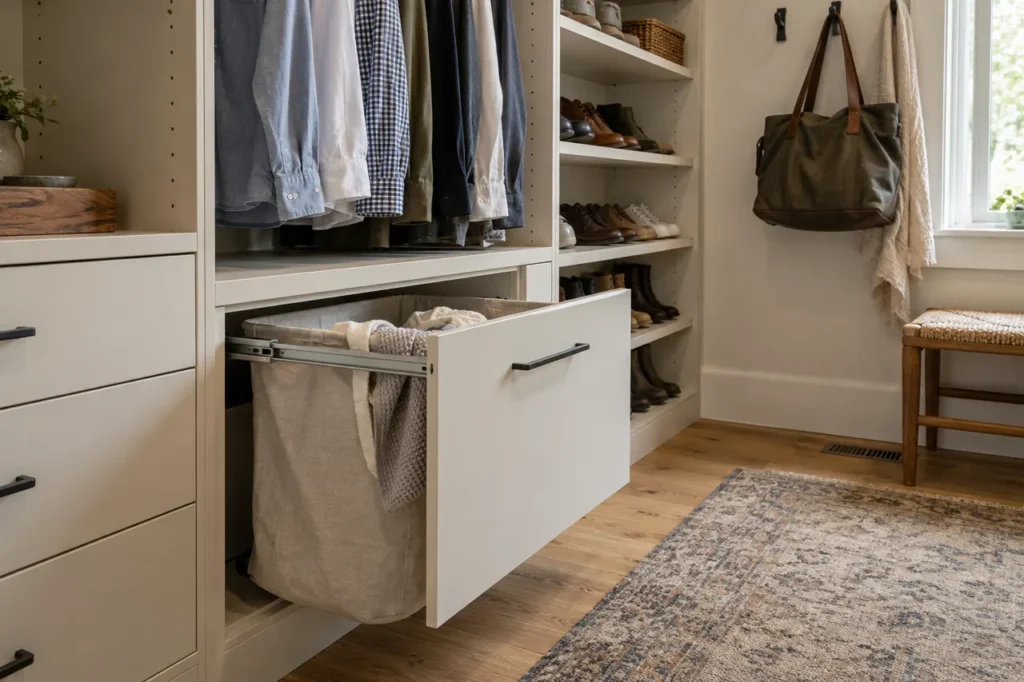
Hampers, baskets and pull-outs affect clearances
A hamper can create a clear landing place for laundry and reduce clothing on the floor. Its position should suit the route out of the room and the way laundry is collected. Pull-out baskets can contain scarves or flexible items, though they require depth and room to extend. In a reach-in with bypass doors, their placement must be checked especially carefully; a hidden pull-out can be worse than a visible shelf.
Consider the weight and maintenance of contents. A deep basket filled beyond easy lifting may be unpleasant to use. If a laundry room is nearby, a closet hamper may be unnecessary. The laundry storage page addresses where sorting, detergents and baskets might work better outside the bedroom.
Use hooks and valet rods with restraint
Hooks can provide a quick place for a robe, bag or frequently worn accessory, but too many can become a layer of visible clutter. A valet rod may help assemble an outfit, air a garment briefly or set aside dry cleaning. It needs a location where extended clothing does not block a door or walking path. If those tasks do not occur in the closet, a fixed shelf or hanging rod may be a better use of the space.
Accessory placement can be more important than accessory type. A useful hook by the entrance may solve a daily issue that a hidden pull-out would not. Conversely, an exposed hook rail on an already crowded wall may make the room feel untidy. Choose features according to actual habits rather than assumed routines.
Mirrors and lighting need room context
A full-length mirror helps dressing if there is space to step back and sufficient light to see accurately. Its position on a door, cabinet front or wall must not interfere with operation. A small mirror wedged into an inaccessible corner offers little practical value. Existing windows and ceiling light affect whether an additional lighting plan is useful.
Cabinetry can be designed with lighting relationships in mind, but electrical design and installation require separately confirmed scope. Avoid choosing a dark front or deep upper shelf without considering how the contents will be illuminated. In a primary closet, light, mirror and circulation form one experience; in a compact reach-in, straightforward visibility may be the priority.
Assess materials, upkeep and cost
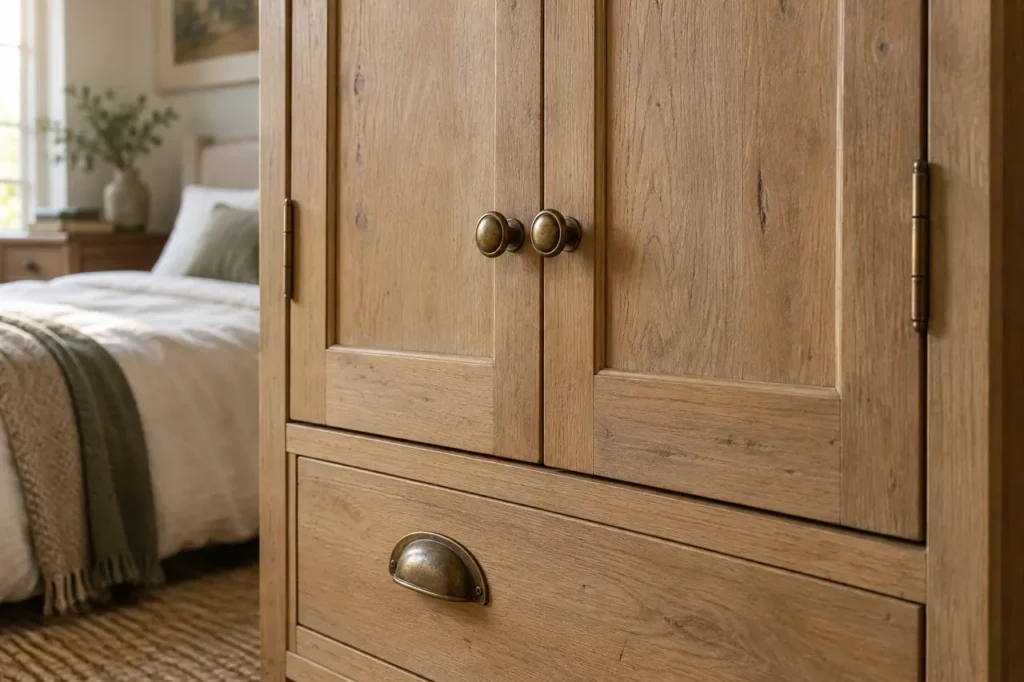
Each pull-out, specialized tray or fitted compartment adds material, hardware, installation detail and often a fixed size that may be less adaptable later. That does not make accessories wasteful; it means their value should be tested. A jewellery drawer used daily may be worthwhile. A complex system for an item worn twice a year may not be. Open shelves and standard drawers can often adapt to future changes more easily.
Finish and hardware should coordinate with the broader cabinetry without requiring an invented collection of specialty products. The finish guide helps frame visual choices, while the cost guide explains how drawer and accessory counts affect scope. Any proposed feature should be listed clearly in the layout and estimate.
Select a few useful details last
For a consultation, identify the tasks that are currently awkward: shoes piled out of sight, jewellery mixed together, no place for a robe or laundry on the floor. Show where these occur in the room and what is stored nearby. Then first check whether a better basic layout solves them. If a specialized feature remains useful, position it for access with doors and drawers in their real operating positions.
The most successful closet may contain only one or two accessories. That restraint leaves room for the things being stored and makes future changes easier. When every component has a reason, the closet can feel finished without feeling crowded.
When comparing options, ask whether a feature makes a task easier every week, whether it remains useful if the collection changes, and whether a simpler shelf or drawer could do the same job. A removable organizer inside a standard drawer may offer more adaptability than a permanent compartment built for a fixed set of items. If two people share storage, one person’s accessory preferences need not dictate the other person’s bay. Different interiors can still sit within a coherent overall design.