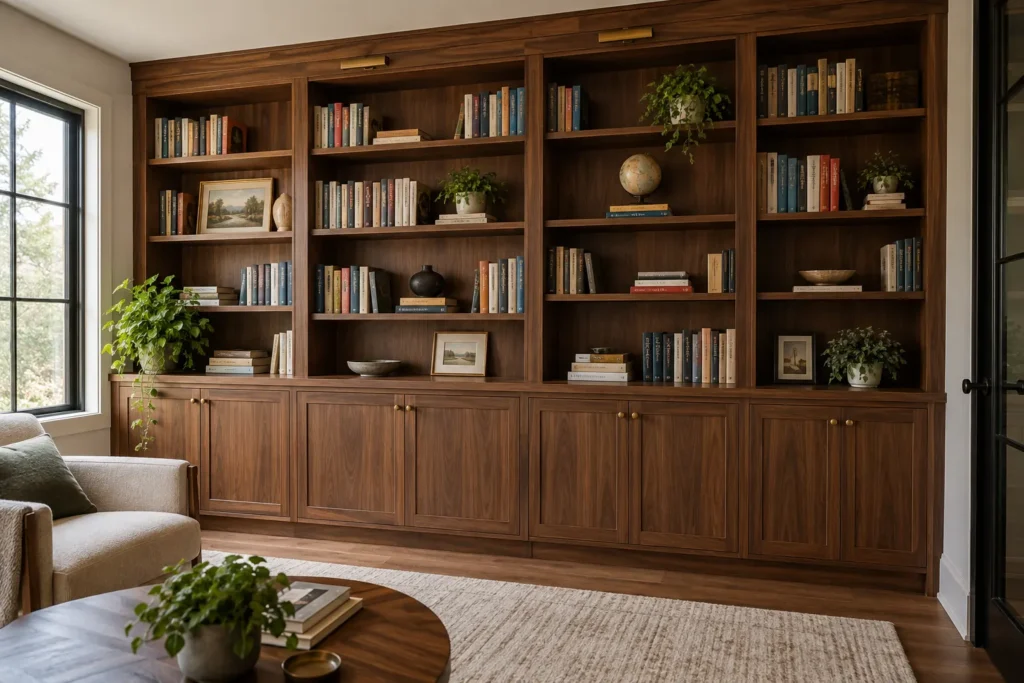
A library starts with the collection
Books vary in height, depth and weight. Paperbacks, large art volumes, binders and children’s books cannot all be served equally by long, identical shelves. Count the current collection in rough groups and allow for growth you can reasonably expect rather than filling every wall in anticipation of unlimited books. Separate active reading from archive, display objects and items that should be hidden in lower cabinets.
A Milton home library may occupy a dedicated room, a living-room wall, a hallway niche or a study beside a desk. The amount of shelving should reflect that setting. A reading space needs light, seating and breathing room as well as book capacity. In a narrow room, a shallower run can preserve circulation better than full-depth cabinetry.
Shelf depth and span are functional choices
A shelf deep enough for large volumes may waste space and hide smaller books behind a second row. Mixed depths or carefully grouped zones can accommodate different sizes. Adjustable shelf positions help a collection change; fixed shelves may provide a particular visual rhythm or structure. A useful design balances those goals without locking every compartment to the current arrangement.
Loaded shelf spans and support require attention because books are heavy. The material, thickness, support arrangement and actual load should be specified for the project. Avoid a long uninterrupted shelf solely to create a clean rendering if it will not suit the intended books. A few proportionate vertical divisions can improve both structure and organization.
Open shelves and lower cabinetry
Open shelving puts books within sight and gives the room a familiar library character. It also exposes every object and needs cleaning. Closed lower storage can hold paperwork, games, chargers or the visual clutter that does not deserve display. Drawers may be useful for smaller items; doors suit larger mixed contents. The balance depends on whether the room is mainly for reading, working or shared family use.
Do not add glass-front doors or decorative features automatically. A closed front changes access, visual density and budget. Display space for art or photographs should be intentional rather than carved out of every shelf at the expense of books. The library wall can be visually calm while still allowing the collection to be the subject.
Windows, doors and a reading position
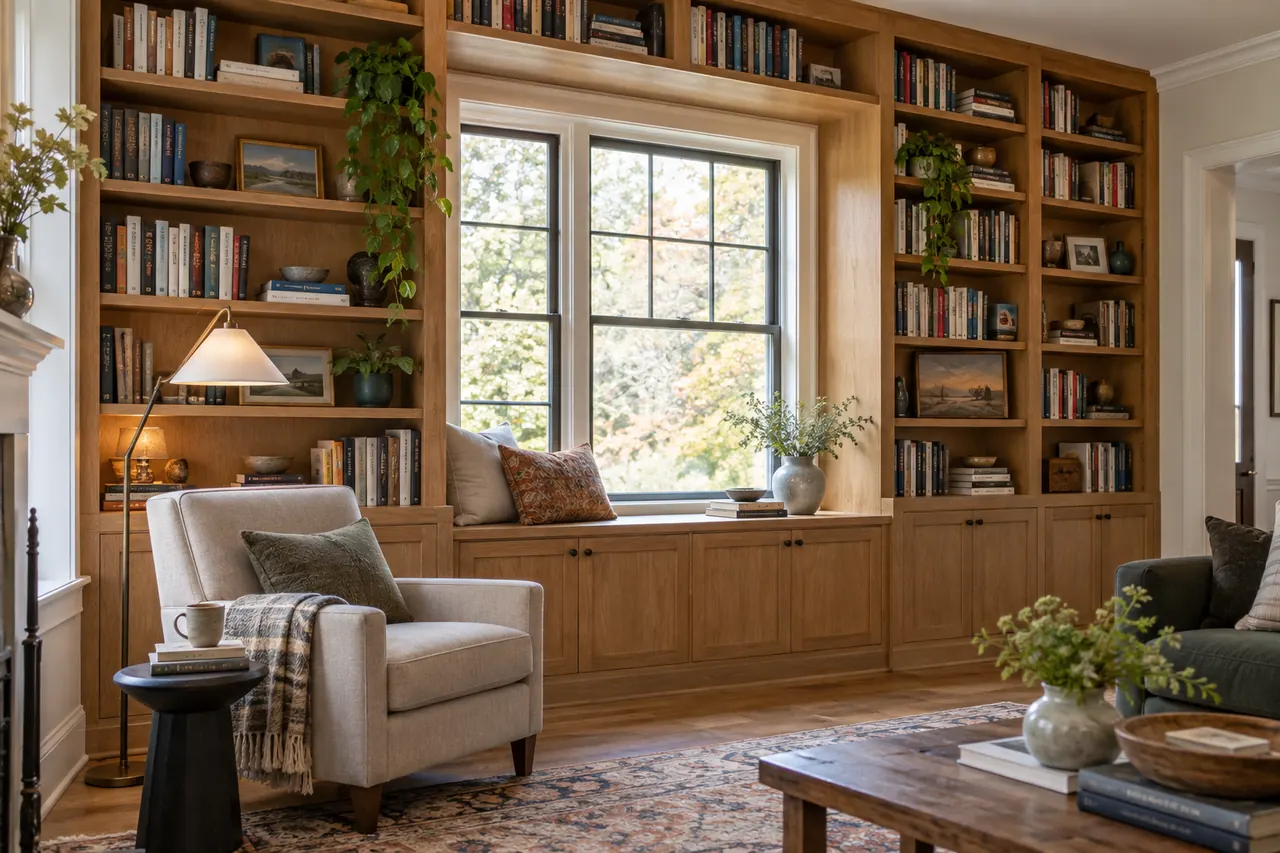
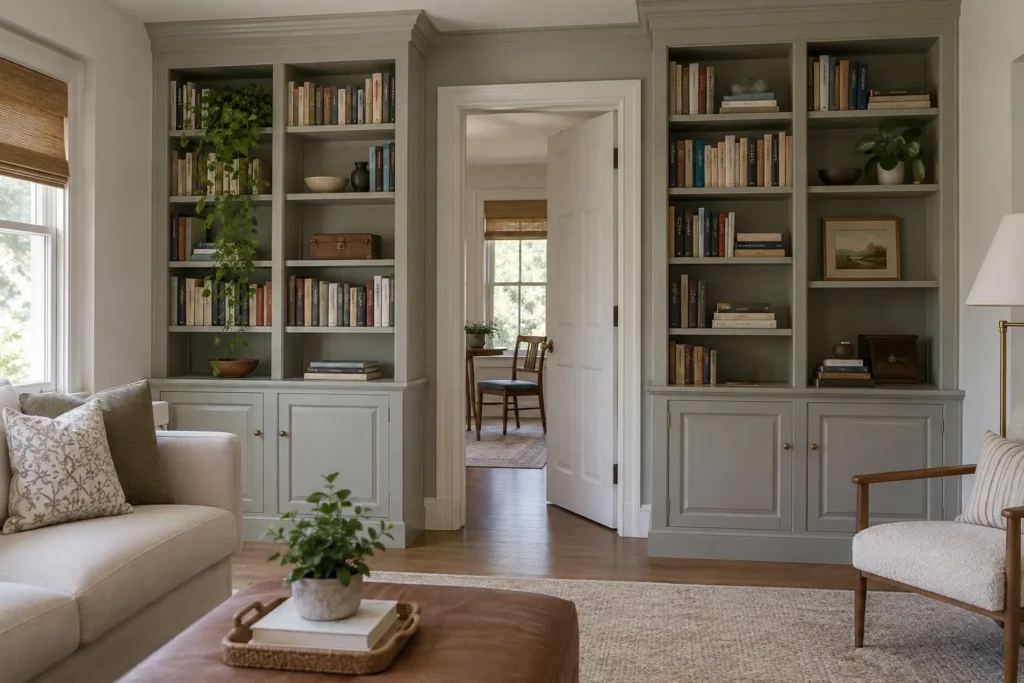
A window can make a reading corner appealing and break up a wall of shelving, but light and trim shape the layout. A bookcase should not obscure a window’s function or force furniture into an awkward position. Door swing, walkway width, outlets, vents and baseboards all limit cabinet depth and placement. Photograph the room from the doorway and the proposed reading seat to understand those relationships.
An existing desk or armchair needs space around it. If a built-in bench is proposed, consider the seat height, approach and what storage beneath it would genuinely be used. A more modest cabinet beside a good reading chair can be more useful than a wall-to-wall treatment that leaves no comfortable place to sit.
Wall-to-wall composition without unnecessary bulk
A full library wall can have a strong architectural effect, yet its upper reaches may be difficult to use regularly. Decide which shelves serve daily browsing and which hold less-frequent volumes or display. A symmetrical elevation may be appropriate in one room, while windows or a doorway make an asymmetrical arrangement more natural. Cabinet proportions should respond to ceiling height and the scale of the room.
Open sections can meet lower doors with a deliberate line that relates to furniture or window sills. Trim, existing mouldings and floor conditions affect how a fitted unit meets the house. A design should not rely on filling a gap with a large, purposeless panel simply to make standard cabinet widths add up.
Materials, finish and the feel of the room
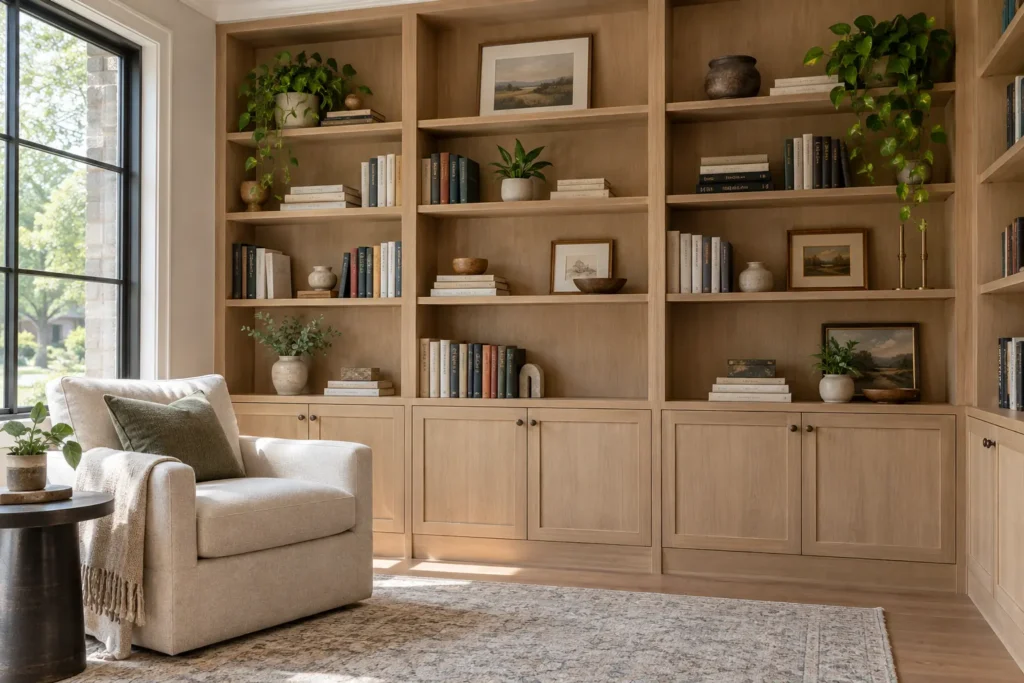
A light finish can make a large shelving wall feel quieter; a warm wood-look tone may give it more presence; darker tones can make the collection feel enclosed and intimate. Consider the actual daylight, floor, trim and adjacent furniture. Shelf edges and vertical divisions influence how the whole wall reads. Decorative hardware matters mostly on closed sections and should remain comfortable to use.
A library can coordinate with a nearby home office without using the same shelf size or drawer configuration. Material options, structural specifications and care requirements should be confirmed rather than assumed. The materials and finishes guide helps frame those choices.
Installation and estimate factors
The scope depends on wall length and height, shelf count and span, lower cabinetry, doors or drawers, finish, trim relationships, irregular walls, removal of existing shelving and installation access. Lighting may be considered in the overall design, but new electrical work is not implied by a shelving service. A written proposal should distinguish cabinet work from any additional preparation or trade work.
If the project includes very large or heavy volumes, bring that inventory to the discussion early so supports can be specified appropriately. The cost of a small alcove bookcase and a fitted room of multiple elevations will differ for reasons far beyond linear wall length. A measured plan provides a more honest basis for estimating than a universal price.
Reading light, handling and long-term care
A library needs enough light for reading and enough access to use its collection. Evaluate existing daylight, nearby task lamps and outlets before allocating the best wall to shelves. The bookcase should not block a window or force the chair into a dim corner. If lighting is to be integrated into cabinetry, its electrical scope and service access must be confirmed separately. A small reading surface may help when there is room to sit and set down a book.
Book ownership also changes. An adjustable portion of the shelving can accommodate new formats and a growing collection, while fixed divisions can give the elevation structure. Avoid storing delicate volumes where they receive avoidable direct sun or where they are difficult to handle. Leave enough space to remove books without catching adjacent objects, and choose any lower doors so they can open around the actual furniture.
Bookcase or broader custom built-in?
When the dominant need is books and a reading area, a library approach keeps shelf depth, span and browsing height central. When the wall must also store toys, equipment or household overflow, custom built-ins may offer a more mixed arrangement. If a screen and audio equipment drive the layout, a media built-in should begin with viewing and ventilation rather than books.
For an initial request, show wide photographs, wall dimensions, windows and doors, a rough book count by size, the seating you expect to keep and any items that must be hidden. Explain whether the room is a quiet reading place, a working study or a shared living area. This helps the proposed shelving suit both the collection and the room it belongs to.