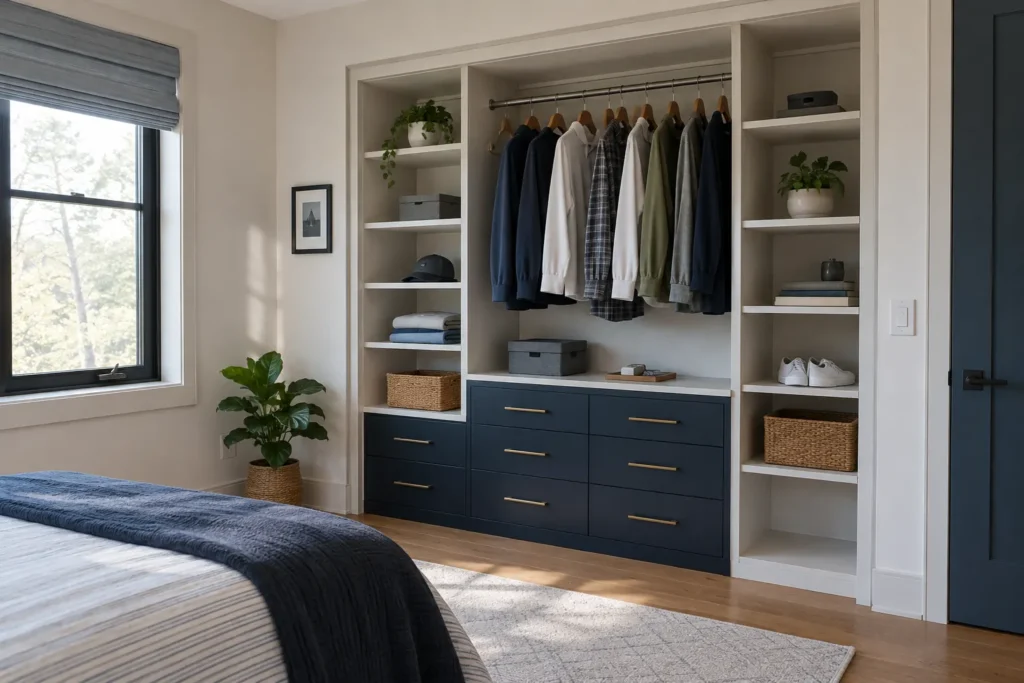
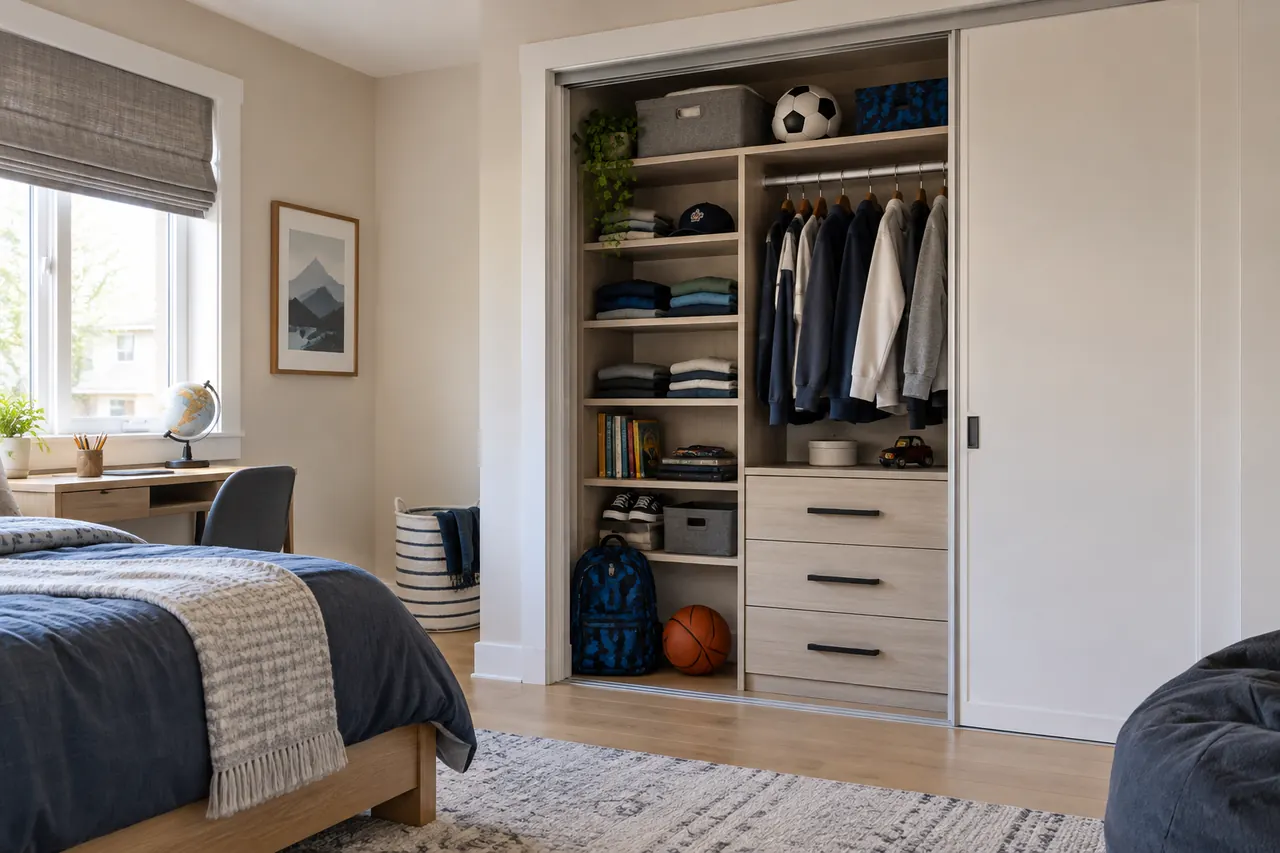
Inventory the present and leave room for change
Start by separating clothing that hangs, clothing that folds, shoes, bags and seasonal items. Count what must be reachable by the child and what a parent will retrieve. A younger child may benefit from lower hanging and simple open shelves, while a teen may value more drawers, privacy and space for longer garments. The same closet can transition if important shelves and rods have adjustable positions.
Not every category deserves a permanent bay. A sports season can bring equipment that is bulky, damp or better stored near the entry or garage. Toys may move out of a bedroom closet as school supplies move in. The goal is a framework that can be rebalanced without replacing the entire installation. A discussion of closet components helps distinguish flexible pieces from specialized fittings.
Place daily items within appropriate reach
Children participate more easily in putting items away when everyday clothes and shoes have obvious, reachable homes. Low rods can serve short clothing; open shelves or bins can hold often-used items without requiring a complex folding system. The upper area can house seasonal clothing or spare bedding that an adult accesses. As the child grows, the useful reach zone rises and the proportions of hanging and drawers can change.
Reachability should not override safe, clear floor space. A protruding drawer, bench or accessory near the closet opening can crowd the bedroom route. If the closet uses sliding doors, put the daily zones where the panels expose them. A child should not need to move a heavy door back and forth to access every morning item. The reach-in closet page explains this opening-first approach.
Plan for school, activities and personal items
Backpacks, uniforms, dance bags, helmets and everyday shoes each have different shapes and timing. A hook may serve a light bag, while a heavy equipment bag may belong on a low shelf or in a mudroom. Separate clean clothing from items that routinely come in wet or dirty. For teens, a few closed drawers or cabinets can contain personal items while open shelves keep frequently used clothing visible.
School papers and supplies may be more useful at a study or desk area than in the closet. The purpose of inventory is to assign each category to the room where it is actually used. A closet that tries to absorb every possession can become difficult to maintain; moving a category elsewhere may free the best space for clothing.
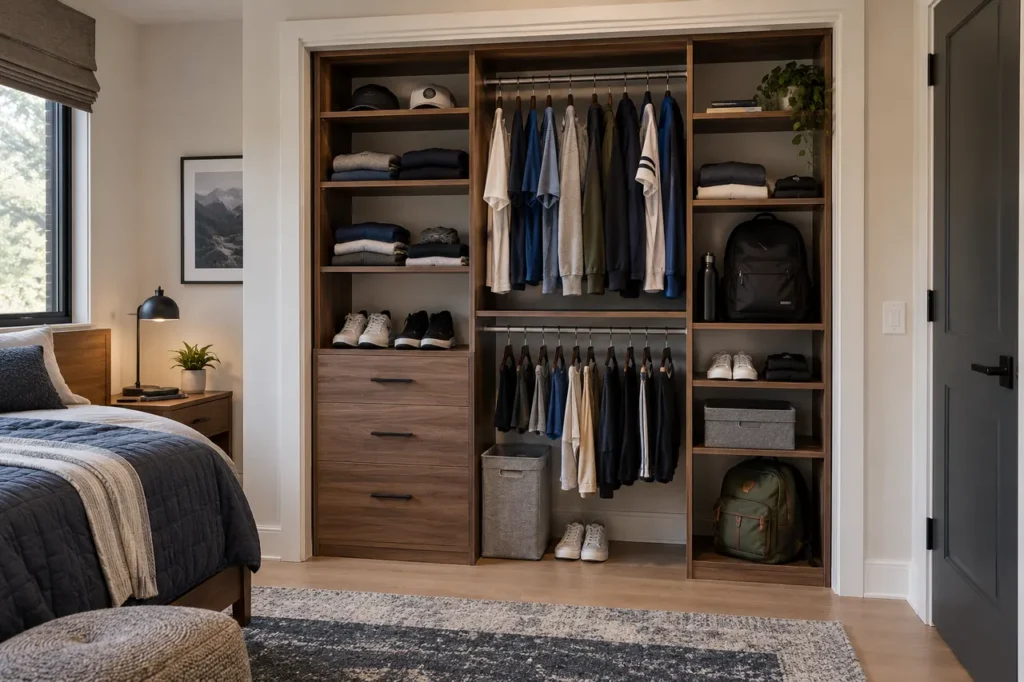
Use durable, straightforward components
Adjustable shelves and rods offer more flexibility than a dense run of fixed cubbies. Drawers can make small clothing easier to sort, but they require room to extend and enough standing space to use. Open shoe shelves should allow for changing sizes and some taller footwear. Handles and fronts should be comfortable to operate and not jut into a narrow pathway.
A restrained neutral interior can remain appropriate through childhood and adolescence. Finishes and hardware should be considered for ordinary wear and cleaning, not just appearance in a photograph. There can still be personality in room colour and movable belongings without making the entire closet dependent on a current theme. See materials and finishes for practical visual choices.
Respect doors and the rest of the bedroom
A closet does not exist separately from the bed, play area or study zone. Measure the door opening and the floor space outside it. Hinged doors reveal a wide interior but need swing room; bypass doors conserve floor space while concealing part of the closet. Drawers must be located where they can fully open, with the bedroom furniture in its normal positions.
In a shared room, the closet may need clear ownership zones. Equal halves may be a starting point, but ages and belongings could justify different storage proportions. A visibly simple arrangement makes it easier to understand what belongs where. Where possible, keep access to windows, switches and vents unaffected by new cabinetry. Our door planning page covers the interaction between the opening and interior layout.
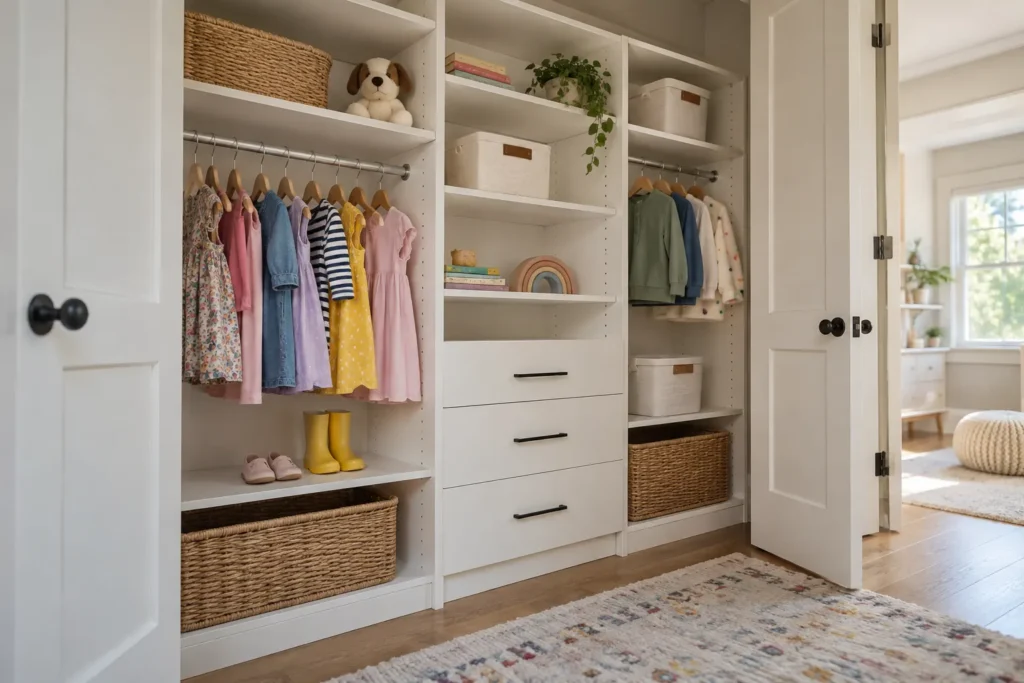
Scope a useful project rather than an elaborate one
Project scope depends on the closet dimensions, organizer complexity, drawers, fronts, chosen materials and whether existing shelving must be removed. A straightforward arrangement of adjustable shelves and hanging may serve the family better than highly specialized accessories that will soon be outgrown. An older teen with a stable wardrobe may have different priorities and may benefit from a more adult-like organization plan.
Photographs and an approximate inventory allow us to compare configurations. Note what gets left on the floor, which items are hard to reach and what is likely to change within the next few years. The cost guide explains scope factors without attaching a universal price to children’s storage. The process shows how measurements and priorities become a layout.
Keep the family routine in view
A useful closet can reduce everyday friction when clothing, shoes and school items have sensible homes. It will not maintain itself if the categories are unclear or access is difficult. Leave enough open capacity for normal changes, and make sure storage that a child is expected to use actually sits within their reach. Adult-controlled upper storage can hold infrequent items without competing with daily zones.
As a child becomes a teen, the same interior may need more long hanging, drawer space or closed storage. Plan for that adjustment early instead of predicting every future hobby. Tell us who uses the room, their current age, the contents and any furniture that must remain; then the design can support the room now while staying adaptable.
Future flexibility does not mean leaving the closet vague today. Give the current routine a clear place for school uniforms, play clothes, occasional outfits and shoes, then identify which parts can move later. A low hanging rod can be raised as clothing grows, and an adjustable shelf stack can be re-spaced for books or larger footwear. The family should be able to make those changes without redesigning the entire room. Where siblings share storage, assign visible zones and allow the allocation to change as their needs diverge.
Lighting and visibility also matter to independence. A dark corner behind a sliding panel invites items to be forgotten, while a well-placed open section lets a child see choices. If the bedroom is small, prioritize floor area for movement and other activities instead of adding bulky cabinetry outside the closet. Simple access often does more than elaborate compartments.